

What Is a Shower Water Filter and How Does It Work?
A shower is part of our daily routine, but have you ever wondered what is actually coming through your showerhead?
Tap water can contain chlorine, sediment, rust particles, and naturally occurring minerals. While municipal water is treated for safety, the treatment process does not necessarily mean that the water is ideal for every household use.
A shower water filter is designed to treat water before it reaches your skin and hair. But what exactly does it do, and how does it work?
Let’s take a closer look.
What Is a Shower Water Filter?
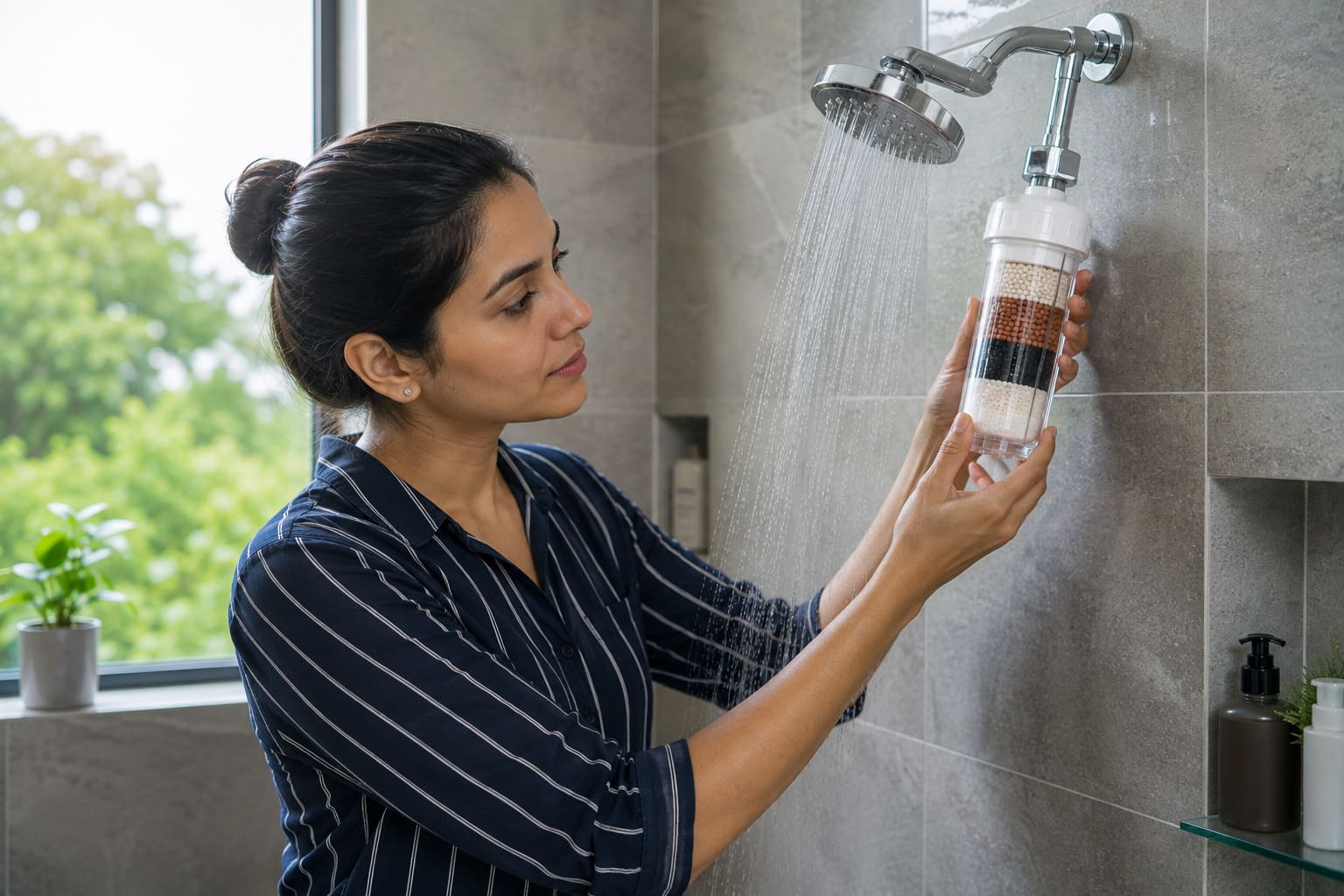
A shower water filter is a compact filtration device installed between your existing shower pipe and showerhead, or sometimes built directly into the showerhead.
As water flows through the filter, it passes through one or more filtration media designed to reduce specific substances.
The exact performance depends on the filter technology, media, water conditions, flow rate, and manufacturer specifications.
image_group{“layout”:”carousel”,”aspect_ratio”:”16:9″,”query”:[“shower water filter installed between shower pipe and showerhead”,”shower water filter cartridge cutaway”,”shower water filtration diagram”]}
How Does a Shower Water Filter Work?
The process is relatively simple.
Step 1: Water Enters the Filter
When you turn on the shower, water travels through the plumbing and enters the filtration unit.
Step 2: Water Passes Through Filtration Media
Inside the filter is one or more types of filtration media. Common examples include:
Activated Carbon:
Carbon can help reduce chlorine, odors, and certain organic compounds, depending on the formulation and operating conditions.
KDF Media:
Some shower filters use copper-zinc media, commonly referred to as KDF, which is designed to help reduce chlorine and certain dissolved metals.
Calcium Sulfite:
Calcium sulfite is another media used in some shower filters and can be effective for reducing chlorine under suitable conditions.
Sediment Filtration:
A physical filter can trap particles such as dirt, sand, and rust before they reach the showerhead.
Many products combine more than one type of media.
Step 3: Filtered Water Reaches the Showerhead
After passing through the filtration media, the treated water continues to the showerhead.
The result depends on what the filter is specifically designed and tested to reduce.
What Can a Shower Filter Reduce?
A shower filter may help reduce certain substances commonly found in household water, including:
- Chlorine
- Sediment
- Rust particles
- Unpleasant odors
- Certain dissolved metals
- Some organic compounds
However, not every shower filter removes all of these contaminants. The actual performance depends on the product and its certification or testing.
Always check the manufacturer’s performance claims rather than assuming that every filter works the same way.
Why Do People Use Shower Water Filters?
People typically install shower filters because they want to improve the quality of water used on their skin and hair.
1. Reduce Chlorine Exposure
Chlorine is commonly used to disinfect municipal drinking-water supplies. A shower filter designed for chlorine reduction may reduce the amount of chlorine in the water reaching the shower.
This can also reduce the noticeable chlorine smell.
2. Improve the Shower Experience
Reducing odors and certain impurities can make shower water feel and smell more pleasant.
3. Help With Dry-Feeling Skin and Hair
Some people find that treated shower water feels gentler on their skin or hair, particularly when chlorine or other water-quality factors contribute to dryness.
However, skin and hair condition can be affected by many factors, so a shower filter isn’t guaranteed to solve these problems.
4. Reduce Sediment
If your water contains visible particles or rust, a suitable sediment filter can help prevent those particles from reaching the showerhead.
Shower Filter vs. Water Softener
One of the most common misconceptions is that a shower filter and water softener do the same thing.
They don’t.
A water softener is specifically designed to reduce water hardness, primarily caused by calcium and magnesium.
A typical shower filter is generally designed to target things such as chlorine, sediment, or certain other contaminants.
If your main problem is:
- White scale on taps
- Mineral deposits
- Soap scum
- Poor soap lather
- Heavy buildup on showerheads
you may be dealing with hard water, and a conventional shower filter may not significantly reduce the hardness.
Does a Shower Filter Make Water Safe to Drink?
No—not necessarily.
A shower filter is designed for shower water, not automatically for drinking-water purification.
Even if a shower filter reduces chlorine or sediment, that doesn’t mean it removes bacteria, viruses, heavy metals, pesticides, or other contaminants that may be present in drinking water.
If you need safe drinking water, use a drinking-water filtration or purification system designed and tested for that purpose.
How Often Should You Replace a Shower Filter?
Filter cartridges have a limited capacity.
How frequently they need to be replaced depends on:
- Water quality
- Amount of water used
- Filter capacity
- Household size
- Manufacturer recommendations
A filter may become less effective as its media becomes exhausted.
Replacing the cartridge according to the manufacturer’s instructions is therefore an important part of maintaining performance.
How to Choose the Right Shower Filter
Before purchasing a shower filter, consider the following:
Identify Your Water Problem
First determine what you’re trying to address.
Is it:
- Chlorine smell?
- Sediment or rust?
- Hard water?
- Odor?
- General water-quality concerns?
Different problems require different treatment technologies.
Check What the Filter Is Designed to Remove
Don’t rely only on phrases such as “multi-stage” or “advanced filtration.”
Look for specific information about:
- Target contaminants
- Testing or certification
- Filter capacity
- Replacement interval
- Recommended flow rate
Consider Your Water Pressure
Some filters can affect water flow. Check whether the product is designed for your shower’s pressure and flow requirements.
Final Thoughts
A shower water filter is a simple point-of-use device that treats water immediately before it reaches your showerhead.
Depending on its design, it may reduce chlorine, sediment, odors, and certain other contaminants. However, it isn’t a universal solution for every water-quality problem.
The most important step is to understand your water first. If hardness is the issue, you may need a softener. If drinking-water safety is the concern, you need a system specifically designed for drinking water.
The right water treatment starts with knowing what is actually in your water—and choosing technology designed to address it.