

Water may look clean, smell normal, and taste fine—but that doesn’t necessarily mean it is free from contaminants. Some water-quality problems cannot be detected with our senses, which is why regular water testing can be an important part of maintaining a safe and reliable water supply.
Whether you use municipal water, borewell water, groundwater, or a private well, knowing what is in your water can help you choose the right treatment instead of relying on guesswork.
Why Should You Test Your Water?
Water testing helps identify physical, chemical, and biological characteristics that may affect its safety, taste, appearance, or suitability for household use.
Depending on your location and water source, testing may reveal issues such as:
- Excessive hardness
- High total dissolved solids (TDS)
- Iron or manganese
- Nitrates
- Fluoride
- Chlorine levels
- Unpleasant odors or taste
- Bacteria and other microorganisms
- Changes in pH
- Other location-specific contaminants
The important point is that different water sources can have very different quality profiles. A filtration system that works well for one home may not be appropriate for another.
When Should You Test Your Water?
1. When You Move Into a New Home
Testing your water when moving into a new property gives you a baseline understanding of its quality.
This is particularly useful if the property uses groundwater, borewell water, or a private well.
2. If Your Water Source Changes
If you switch from municipal water to borewell water, install a new source, or experience a change in your supply, consider testing the water again.
Changes in the source can mean changes in water chemistry and contamination risks.
3. When the Taste, Smell, or Appearance Changes
A sudden change in water can be a warning sign.
Pay attention to:
- Unusual taste
- Strange odors
- Cloudiness
- Yellow, brown, or unusual coloration
- Visible particles
- Unexpected changes in hardness or scale
While these signs don’t tell you exactly what the problem is, they are good reasons to investigate further.
4. After Flooding or Environmental Events
Flooding, heavy rainfall, construction, agricultural activity, or other environmental changes can affect groundwater and private water sources.
If your water source may have been affected, testing can help determine whether its quality has changed.
5. Before Installing a Water Filter
This is one of the most useful times to test.
Instead of choosing a water purifier based only on general recommendations, testing can help you understand what needs to be treated.
For example:
- High sediment → sediment filtration may be appropriate.
- Chlorine or taste issues → activated carbon may help.
- High hardness → a water softener may be more appropriate.
- Certain dissolved contaminants → specialized treatment may be required.
- Microbial contamination → appropriate disinfection or purification may be necessary.
Test first, treat second.
How Often Should You Test?
There isn’t one universal testing schedule for every household. It depends on your water source, location, local conditions, and potential contamination risks.
For a private well or borewell, periodic testing is especially important because the quality of groundwater can change over time.
Municipal water supplies are generally monitored by the responsible water authority, but household plumbing, storage tanks, and changes in local conditions can still affect water quality at the point of use.
For specific testing frequencies, follow recommendations from your local water authority or a qualified water-testing laboratory.
What Should You Test For?
The answer depends on your water source and concerns.
A basic water-quality assessment may include parameters such as:
Physical and chemical parameters
- pH
- TDS
- Hardness
- Turbidity
- Iron
- Chloride
- Fluoride
- Nitrate
Microbiological parameters
- Total coliform bacteria
- E. coli
Additional testing may be appropriate depending on local geology, agriculture, industrial activity, plumbing materials, or known contamination risks.
A laboratory or water-treatment professional can help determine which tests are appropriate for your situation.
Home Water Test Kits vs. Laboratory Testing
Home testing kits can be useful for getting a quick indication of certain water parameters, such as pH, hardness, or TDS.
However, they have limitations.
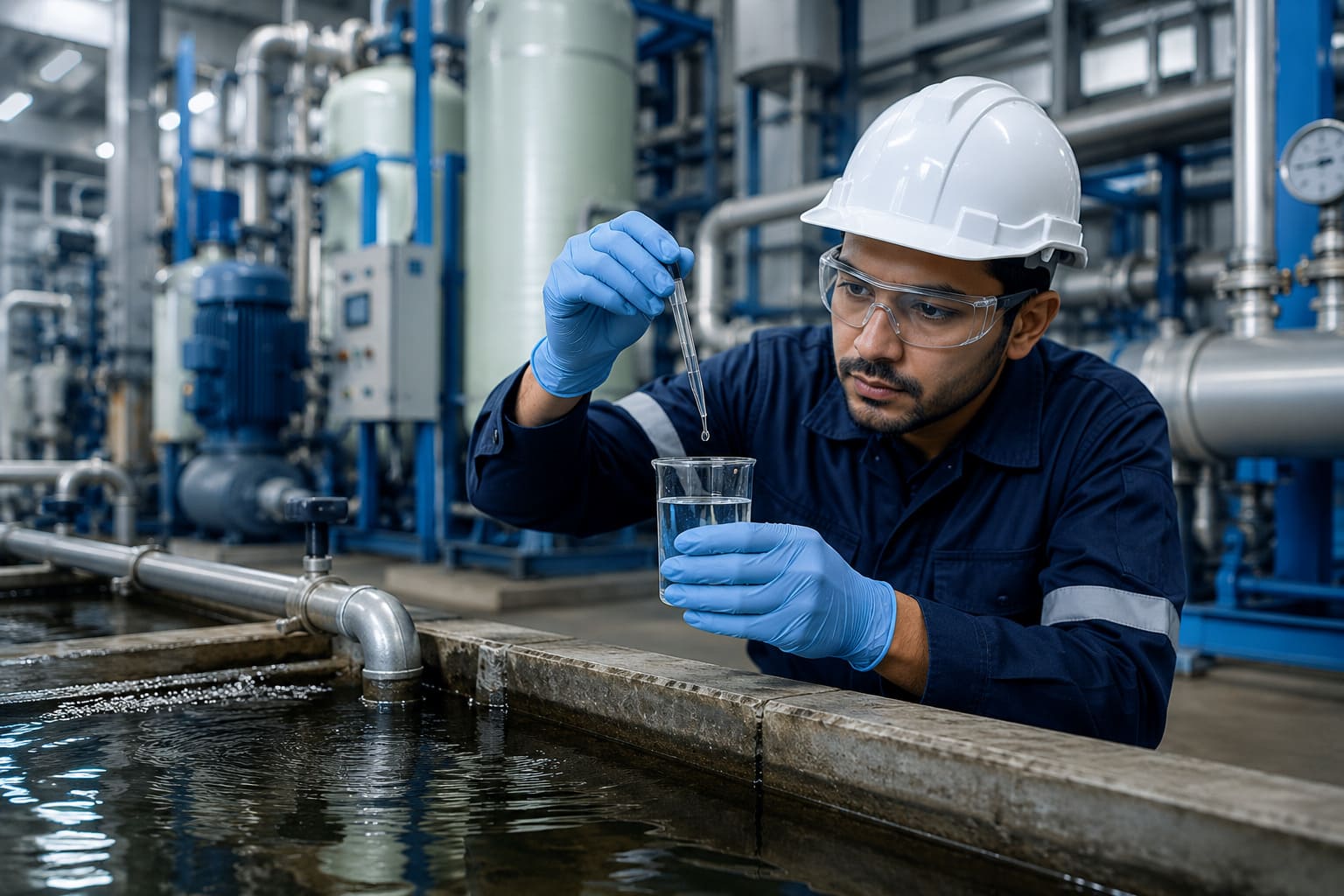
For important health-related decisions or when contamination is suspected, laboratory testing is generally the better choice. A qualified laboratory can use standardized methods and provide more reliable results.
If a test shows an unexpected result, consider confirming it with a professional laboratory before making major treatment decisions.
Don’t Choose a Filter Based Only on TDS
TDS is one of the most commonly discussed water-quality measurements, but it doesn’t tell you everything about your water.
A high TDS reading doesn’t automatically mean water is unsafe, and a low TDS reading doesn’t guarantee that water is free from all contaminants.
Two water samples can have similar TDS values but contain very different substances.
That’s why water treatment should be based on a broader understanding of water quality rather than a single number.
What to Do After Testing
Once you have your results:
- Identify the parameters that require attention.
- Compare the results with applicable drinking-water standards or recommendations.
- Determine whether the issue affects drinking water, working water, or both.
- Select treatment technology designed for the specific problem.
- Retest when appropriate to confirm that the treatment is working.
Avoid buying a filtration system simply because it has a long list of features. The best system is the one that addresses the actual problems in your water.
Final Thoughts
Water testing is about more than checking whether water looks clean. It provides information that can help you make better decisions about drinking-water safety, household water treatment, and filtration.
If you’re unsure whether you need a filter, softener, purifier, or other treatment system, start with the water itself.
Test your water. Understand the results. Then choose the right treatment.